
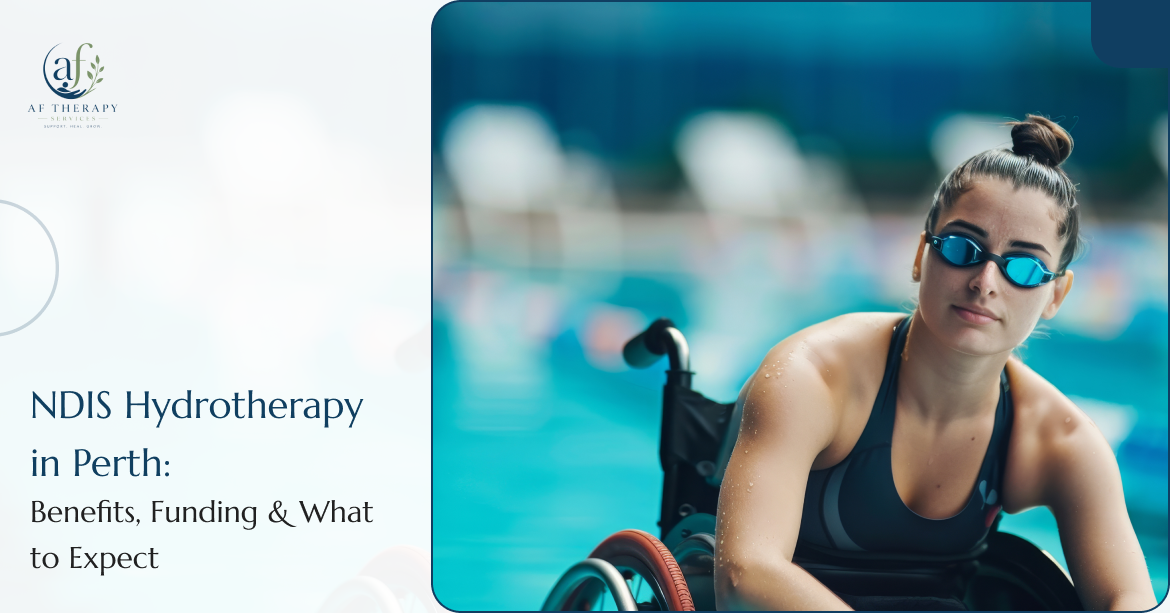
NDIS Hydrotherapy in Perth: Benefits, Funding & What to Expect
Water has a way of making movement feel possible again. For NDIS participants living with pain, weak muscles, or limited mobility, that’s not a small thing; it's the difference between avoiding exercise and actually looking forward to it.
NDIS hydrotherapy in Perth uses warm, supportive water to help participants build strength, improve balance, and move with less pain, all under the guidance of a qualified therapist. It’s one of the most effective allied health supports funded under the NDIS, yet it’s still one of the least understood.
This guide breaks down how NDIS hydrotherapy works, who it helps, what a session actually looks like, and how to get it funded through your plan.
Quick Answer
NDIS hydrotherapy is a water-based therapy service delivered in a heated pool, typically around 34°C, where a therapist guides participants through targeted exercises. It reduces joint load through buoyancy, making movement easier and less painful than land-based exercise. It’s funded under Improved Daily Living or Improved Health and Wellbeing in an NDIS plan and suits people with neurological conditions, chronic pain, mobility loss, or post-injury rehabilitation needs.
Why It Matters
Land-based exercise isn’t always realistic for someone with severe joint pain, muscle weakness, or a neurological condition like Parkinson’s disease. Gravity works against them at every step.
Water changes that equation. At shoulder depth, buoyancy significantly reduces the effective body weight pressing down on joints, which means participants can move, stretch, and strengthen muscles they otherwise couldn’t load safely on land.
For NDIS participants, this translates into real functional gains: more independence at home, safer transfers, and greater confidence in taking part in community activities.
Key Benefits of NDIS Hydrotherapy
Improved Daily Living or Improved Health and Wellbeing- Reduced joint pain — warm water and buoyancy take pressure off hips, knees, and the spine
- Improved mobility — gentle resistance builds strength without the impact of land-based exercise
- Better balance and coordination — water provides a safer environment to practise unsteady movements
- Increased muscle strength — water resistance works muscles through a full range of motion
- Greater community participation — improved fitness supports involvement in sport, school, or social activities
- Pain management — heat and movement combined can ease chronic pain without medication
- Confidence building — a safe, supported setting encourages participants to move more freely
Who Benefits Most from Hydrotherapy?
Hydrotherapy is commonly recommended for people managing:
- Multiple Sclerosis (MS) — warm water eases spasticity and supports safer movement
- Post-stroke recovery — buoyancy assists relearning movement patterns with reduced fall risk
- Parkinson’s Disease — water resistance helps with balance and coordinated movement
- Muscular Dystrophy — supports strength maintenance without overloading weakened muscles
- Chronic pain or arthritis — reduces load on inflamed or painful joints
- Post-surgical rehabilitation — allows early, low-impact movement during recovery
How NDIS Hydrotherapy Works: Step-by-Step
Step 1: Initial Assessment
A therapist reviews your NDIS goals, medical history, and current mobility to design a program suited to your needs.
Step 2: Program Planning
Exercises are tailored to your goals whether that’s walking independently, building strength, or managing pain.
Step 3: Pool-Based Sessions
Sessions take place in a heated, wheelchair-accessible pool under direct therapist supervision. A typical setup, such as AF Therapy’s 15m pool heated to 34°C with wheelchair access, allows safe entry and targeted exercise regardless of mobility level.
Step 4: Progress Review
Your therapist tracks improvements against your NDIS goals and adjusts the program as your strength and mobility change.
Step 5: Integration with Other Therapies
Hydrotherapy often works alongside occupational therapy, physiotherapy, or exercise physiology for a well-rounded support plan.
NDIS Funding and Eligibility
Hydrotherapy is typically funded under the Improved Daily Living or Improved Health and Wellbeing support categories in an NDIS plan, depending on your goals.
To access hydrotherapy through the NDIS, you generally need:
- An NDIS plan with relevant capacity-building funding
- A referral or recommendation from a treating allied health professional (not always mandatory, but common)
- Goals related to mobility, pain management, or physical function documented in your plan
Both plan-managed and self-managed participants can typically book directly with a registered provider. NDIA-managed participants need to confirm the provider is registered before booking.
Best Practices for Getting the Most from Hydrotherapy
- Attend sessions consistently — progress builds over weeks, not single visits
- Communicate pain or discomfort immediately so your therapist can adjust exercises
- Combine hydrotherapy with land-based therapy for the best long-term outcomes
- Stay hydrated before and after sessions, even though you’re in water
- Set clear, measurable goals with your therapist tied to your NDIS plan
Common Mistakes to Avoid
- Skipping the assessment — jumping straight into generic pool exercise without a tailored plan reduces effectiveness
- Confusing hydrotherapy with swimming lessons — hydrotherapy is clinically guided, not recreational
- Inconsistent attendance — irregular sessions slow progress and make it harder to track results
- Ignoring pain signals — pushing through pain rather than reporting it can set back recovery
- Not linking sessions to NDIS goals — funding and reporting work better when therapy ties directly to your plan objectives
Hydrotherapy vs. Land-Based Physiotherapy
| Factor | Hydrotherapy | Land-Based Physiotherapy |
|---|---|---|
| Joint impact | Low — buoyancy reduces load | Higher — full body weight on joints |
| Best for | Severe pain, neurological conditions, limited mobility | General strength and mobility goals |
| Environment | Heated pool, therapist-guided | Clinic or home setting |
| Pain management | Warmth plus buoyancy eases pain during movement | Relies on manual therapy and exercise alone |
| Accessibility | Requires pool access and wheelchair-friendly entry | Widely available, minimal equipment needed |
Many participants benefit from a combination of both, using hydrotherapy to build a foundation before progressing to land-based exercise.
Expert Tips
Therapists often recommend starting hydrotherapy early in a rehabilitation journey, particularly after stroke or surgery, because the reduced joint load allows safer movement sooner. Pairing hydrotherapy with an allied health assistant for supervised practice between clinical sessions can also help participants maintain momentum toward their NDIS goals.
Future Trends in NDIS Hydrotherapy
Demand for aquatic therapy is growing across Australia’s disability sector as more providers recognise its value for chronic condition management. Expect to see:
- Greater integration of hydrotherapy with telehealth-supported goal tracking
- More providers offering combined hydrotherapy and exercise physiology programs
- Increased focus on wheelchair-accessible, purpose-built therapy pools
- Growing evidence supporting hydrotherapy for mental health and pain-related NDIS goals
Frequently Asked Questions
Q1. What is NDIS hydrotherapy?
NDIS hydrotherapy is a water-based therapy service, funded through an NDIS plan, that uses a heated pool and guided exercises to improve mobility, strength, and pain management.
Q2. Who can access hydrotherapy under the NDIS?
Participants with mobility challenges, neurological conditions, chronic pain, or post-surgical recovery needs documented in their NDIS plan can typically access hydrotherapy under Improved Daily Living or Improved Health and Wellbeing funding.
Q3. How is hydrotherapy different from regular swimming?
Hydrotherapy is clinically guided by a qualified therapist and targets specific physical goals, unlike recreational swimming or general aquatic fitness classes.
Q4. How many hydrotherapy sessions will I need?
This varies by individual goals and condition, but most therapists recommend consistent weekly or fortnightly sessions over several months to see measurable progress.
Q5. Is hydrotherapy covered by NDIS funding?
Yes, when it’s linked to documented goals in your NDIS plan and delivered by a registered allied health provider.
Q6. Can hydrotherapy help with chronic pain?
Yes. Warm water combined with buoyancy-supported movement can reduce joint pain and muscle tension, making it a common recommendation for chronic pain management.
Conclusion
NDIS hydrotherapy gives participants a safer, more comfortable way to build strength and mobility than land-based exercise alone often allows. For people managing conditions like MS, Parkinson’s, or post-stroke recovery, a heated, wheelchair-accessible pool paired with a qualified therapist can make consistent progress genuinely achievable.
If hydrotherapy aligns with your NDIS goals, talk to your support coordinator or a registered allied health provider about adding it to your plan.
Key Takeaways
- Hydrotherapy uses warm water and buoyancy to reduce joint load and ease pain during exercise
- It’s funded under Improved Daily Living or Improved Health and Wellbeing in an NDIS plan
- It suits participants with neurological conditions, chronic pain, or mobility loss
- Consistency and clear goal-setting drive the best outcomes
- Combining hydrotherapy with land-based therapy often delivers the strongest results